
THE MOMENT OF CHOICE
Supermarket Advertising in Fiji: A Practical Guide for FMCG Brands
· AisleWise
A product can be stocked and still be easy to miss. Supermarket advertising gives brands another way to introduce a product, explain an offer or prompt consideration during the shopping trip.
For marketers considering in-store advertising in Fiji, the useful questions are practical: which stores carry the product, where will the message appear, what should shoppers do next, and what evidence will show whether the campaign worked?
What supermarket advertising means in practice
Supermarket retail media includes advertising within a retailer’s shopping environment. This guide focuses on physical placements on trolleys, baskets, shelves, floors and checkouts: forms of point-of-purchase advertising.
A social advertisement or roadside billboard can reach someone before a visit. In-store media reaches people within the shopping environment, where products, prices and availability can make the message immediately relevant. The two can work together: pre-visit advertising introduces the brand; an in-store placement helps shoppers recognise it or find the product.
Match the message to the shopping moment
The same message will not serve every stage equally well.
- Arriving: introduce a recognisable brand or simple product promise before shoppers reach the category.
- Navigating aisles: help shoppers locate a product or remember a relevant purchase.
- Comparing at the shelf: explain a distinguishing benefit, identify a new variant or communicate an approved offer.
- Approaching checkout: reinforce a brand or prompt a purchase that remains practical at that point.
Use checkout reminders for products shoppers can conveniently pick up, and reserve detailed explanations for positions where they can pause. Choose the shopper action first, then the position and message.
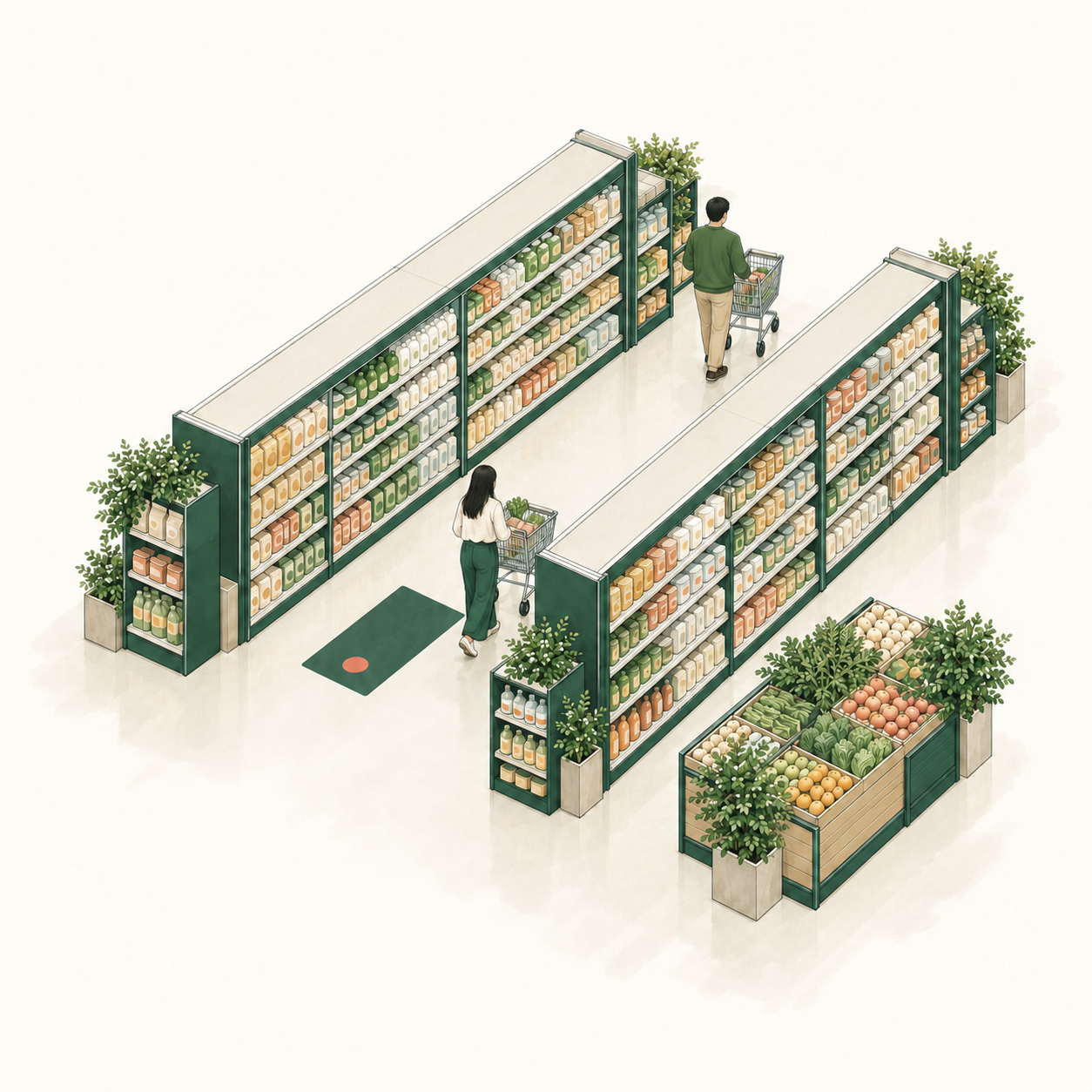
Choose a placement that can do the job
AisleWise’s format guide describes the positions below and the roles they can play in a campaign. Campaign availability depends on participating retailers, approved placements and individual store arrangements.
Trolley media: brand presence across the trip
Shopping trolley advertising can support awareness, launch recognition and purchase reminders. AisleWise lists CartFront, mounted on the front of the trolley basket, and CartGrip, integrated into the handle.
Consider whose sightline each surface faces. Use a recognisable pack, a clear brand and one message that makes sense beyond a single aisle.
Basket media: a message accompanying the shopper
Nest is an insert within the shopping basket. It is worth considering where basket use suits the intended shopping mission, such as picking up a few essentials.
Keep the communication compact and consider how products placed in the basket could affect visibility.
Shelf media: explain the choice beside the product
Shelf advertising suits category consideration, new product introductions and promotional communication. Fin projects from the shelf edge; FinTake adds a take-away component.
Use the position to answer a purchase question: what is new, which variant is this, or what is the offer? Check proximity to the correct product. A take-away component also needs an agreed replenishment plan.
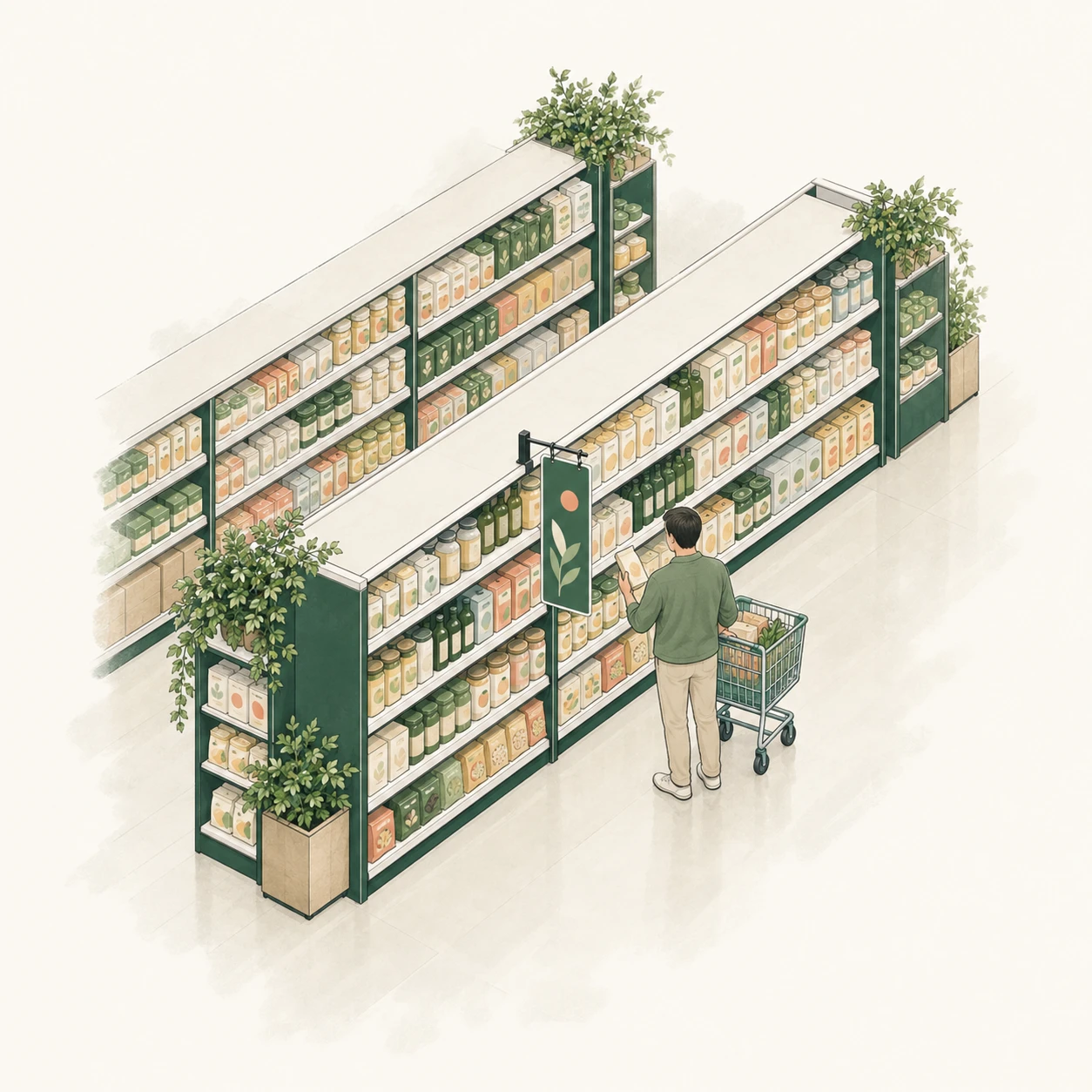
Floor media: guide attention towards the category
Path is an aisle-floor placement. It can provide a directional cue or introduce seasonal or launch activity along an agreed route.
A direction must match the actual store layout. Position, legibility, suitable materials and cleaning requirements need retailer approval.
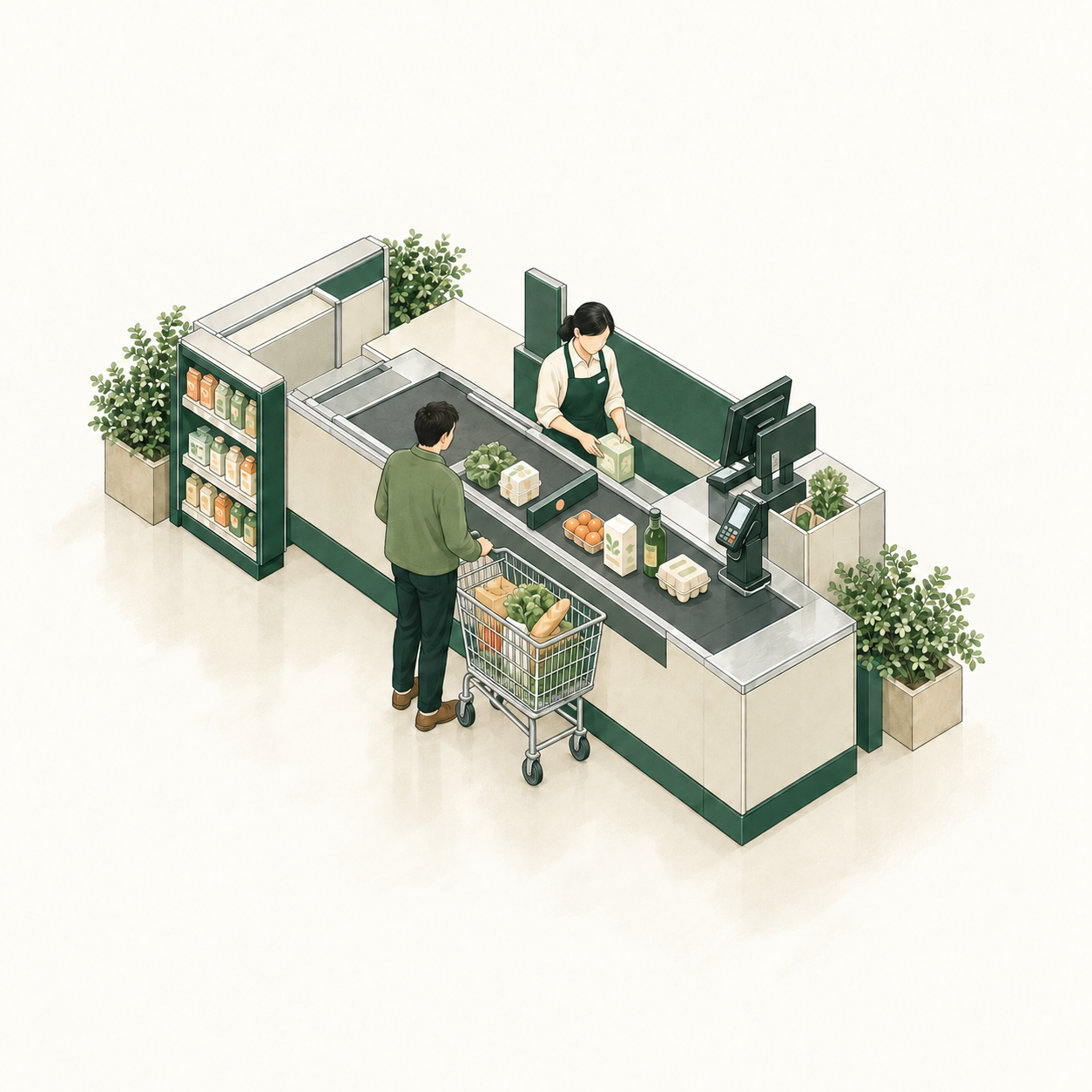
Checkout media: a concise final reminder
Next uses divider bars at staffed checkouts. AisleWise also lists Self-Checkout Media, on approved frames surrounding self-checkout screens.
These positions can suit brand reinforcement or short reminders. A last-minute purchase prompt needs a product shoppers can conveniently access, while the placement must keep checkout tasks clear.
Static and digital media involve different trade-offs: static artwork can provide a consistent message; digital can accommodate changing content where suitable infrastructure exists. Compare suitability, update requirements and total cost.
Example: introducing a new sauce
Consider a distributor launching a new sauce that is stocked in selected supermarkets. Shelf media could identify the pack beside competing sauces and explain its main point of difference. Trolley media could reinforce recognition earlier in the shopping trip. Each placement has a purpose: one supports comparison at the category, while the other builds familiarity along the journey. Neither approach automatically delivers incremental sales.
Make the campaign workable before booking
For FMCG advertising in Fiji, start with named stores and the product’s actual distribution. Confirm the advertised pack or variant is stocked, replenishment is planned and any promoted price applies in those stores during the campaign.
Ask for the proposed position within each store. Fixture fit, competing signage, product visibility and shopper movement matter more than a format name alone.
Adapt creative to the surface. Use a clear pack image, readable type and one main message. Confirm the appropriate language with local commercial teams and check that offer conditions remain legible. Ask who will adapt artwork, supply production-ready files and obtain approval; confirm dimensions and materials for the agreed fixture before printing.
Set responsibilities for installation, dated checks, damage replacement, replenishing take-away material and removal. Agree how missed installations or out-of-stock products will be handled.
Choose duration around the objective, stock readiness, promotion dates and practical production lead times. Compare the full cost, including media, creative, print, installation, maintenance, removal and any measurement. Start with stores where product availability, placement and execution align, then use the campaign’s findings to guide the next investment.
Agree what the evidence can establish
Performance reporting should distinguish five different questions:
- Verified installation: Was the agreed media present, in the right position and during the agreed period? Dated photographs and checks can document delivery.
- Opportunity to see: How many possible exposures can reasonably be estimated? Ask for the traffic source, placement assumptions and calculation. Total store visits do not establish exposure to every placement.
- Engagement: Was a response observed, such as a QR scan or survey response, if these were included? Engagement does not establish a purchase.
- Sales movement: Did units or revenue change? Stock, price, promotions, seasonality and other advertising can also affect the result.
- Incremental sales: What additional sales occurred because of the campaign? Credible evidence needs a defensible estimate of what would have happened without it, such as a well-designed comparison with suitable control stores, and an explanation of uncertainty.
IAB and IAB Europe’s in-store measurement standards distinguish opportunities for exposure from confirmed viewing. Their detailed guidance focuses on digital formats; it does not certify these physical placements. Their incremental measurement guidance explains why attributed outcomes and causal impact differ.
Agree the available data and method before launch. Installation reporting can be useful without claiming that it proves sales impact.
Start with a brief that makes decisions easier
Before comparing media options, write down:
- Objective: the single change the campaign should support.
- Product and stores: the exact product, target locations and confirmed stock position.
- Shopper action: notice, find, compare, try or remember.
- Timing and budget: campaign dates and the amount available for the complete activity.
- Evidence: what can realistically be collected and what decision it should inform.
Planning a product launch, promotion or brand campaign in Fiji? Tell AisleWise which products you want to promote, where they’re stocked and what you want shoppers to do. We’ll help identify the in-store placements worth considering.