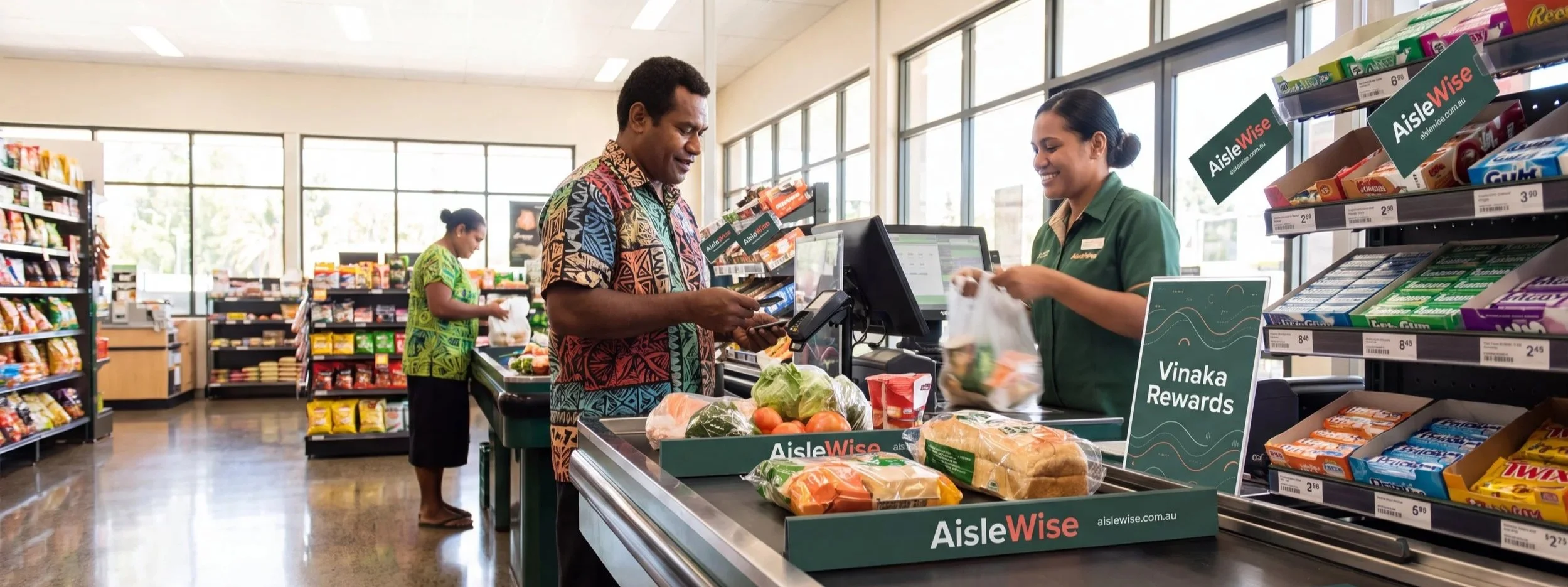
Activation Lab
AisleWise designs shopper activations in Fijian stores, built to change what the shopper does at the point of purchase and prove it.
The shift: we don’t start with a format
Most retail media starts with an inventory list: which Fin, which floor panel or which trolley is available to sell. AisleWise starts somewhere else.
Before we recommend a single format, we ask one question:
What do we need the shopper to do differently?
Pick it up. Switch. Trade up. Try it once. Come back and buy it again. Every AisleWise action is built around a defined shopper behaviour, not a piece of inventory.
Objective → behaviour → activation → measurement.
The behaviour determines the activation. The activation determines the media. The objective determines what we measure.
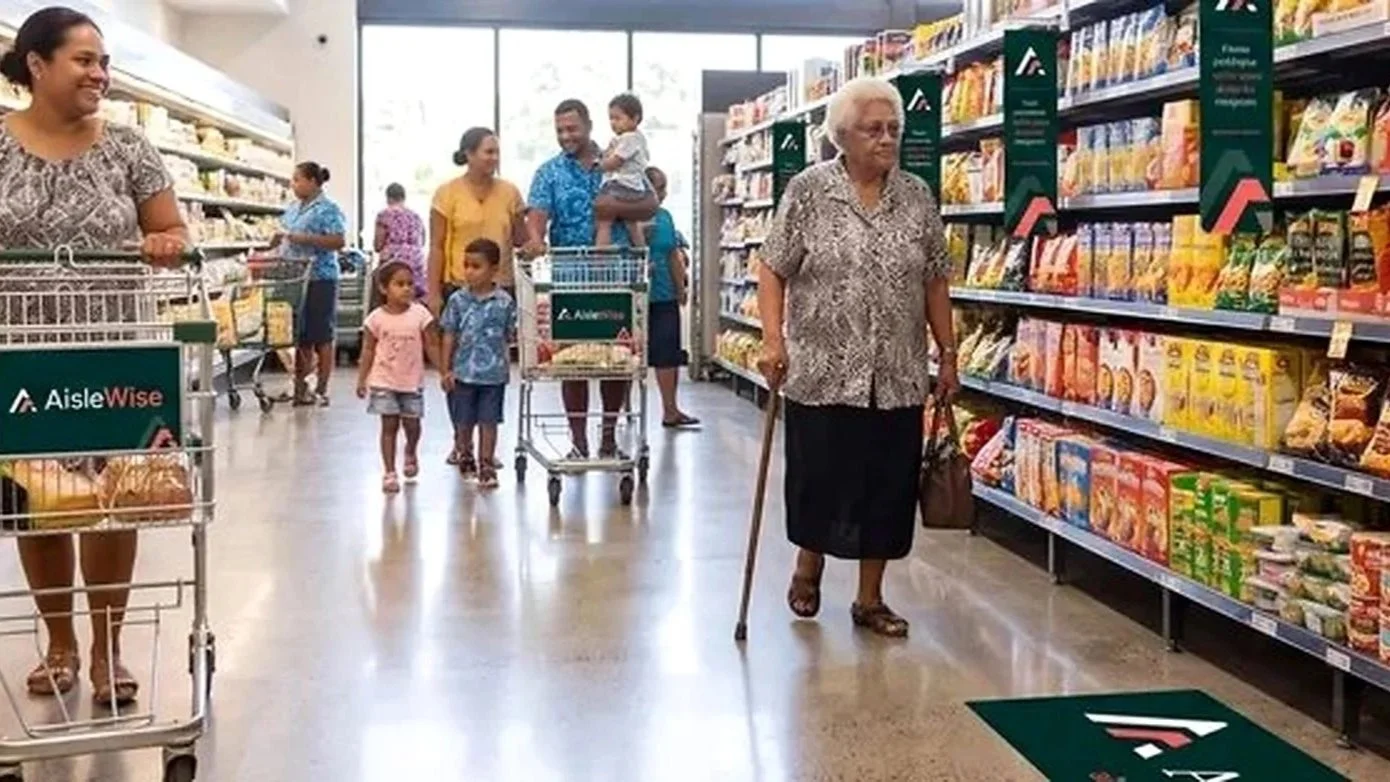
How an activation gets built:
Commercial objective - what’s the business problem?
Shopper barrier - what’s stopping the purchase today?
Target behaviour - what should the shopper do instead?
Activation mechanic - what gives them a reason to act?
Media architecture - which AisleWise formats support that, specifically?
Execution - installed where, when, for how long - verified.
Measurement - agreed before launch, reported honestly after.

Talk to us
AisleWise works with advertisers and retailers across Fiji to design activations that start with a shopper behaviour and end with an honest answer about what changed.

Built to be measured, not just installed.
Every AisleWise activation carries a measurement hypothesis from day one, written before launch and not bolted on afterward.
That’s where Patternfield, our shopper insights team, comes in. Patternfield defines the baseline, tracks what happens during the activation, and where retailer data allows, checks it against comparable stores rather than relying on a simple before and after. We separate what we observed, what’s associated, and what the evidence actually supports.
Where deployed, AisleWise Trace verifies that an approved activation went correctly, the right store, the right placement, the right dates.
Design → verify → measure.
We don’t promise a headline sales number before a campaign runs. We agree what we’re going to measure, then tell you what the data shows.
Where we draw the line.
AisleWise designs for influence, not manipulation. We don’t run activations built to exploit vulnerability, reduced decision making capacity or susceptible audiences, including tactics that deliberately target children’s impulsivity or limited understanding. We don’t use disguised advertising, manufactured scarcity, or concealed sensory tricks.
We don’t carry advertising for tobacco, lottery products, adult themes, violence or political campaigns. Liquor advertising placed only within liquor aisles and liquor stores, at the category decision, not beyond it.
Every activation we design needs to answer three questions before it runs:
Is it truthful?
Is the influence reasonably transparent?
Does it exploit vulnerability?
If it fails any one of those, it doesn’t matter how well it could perform.